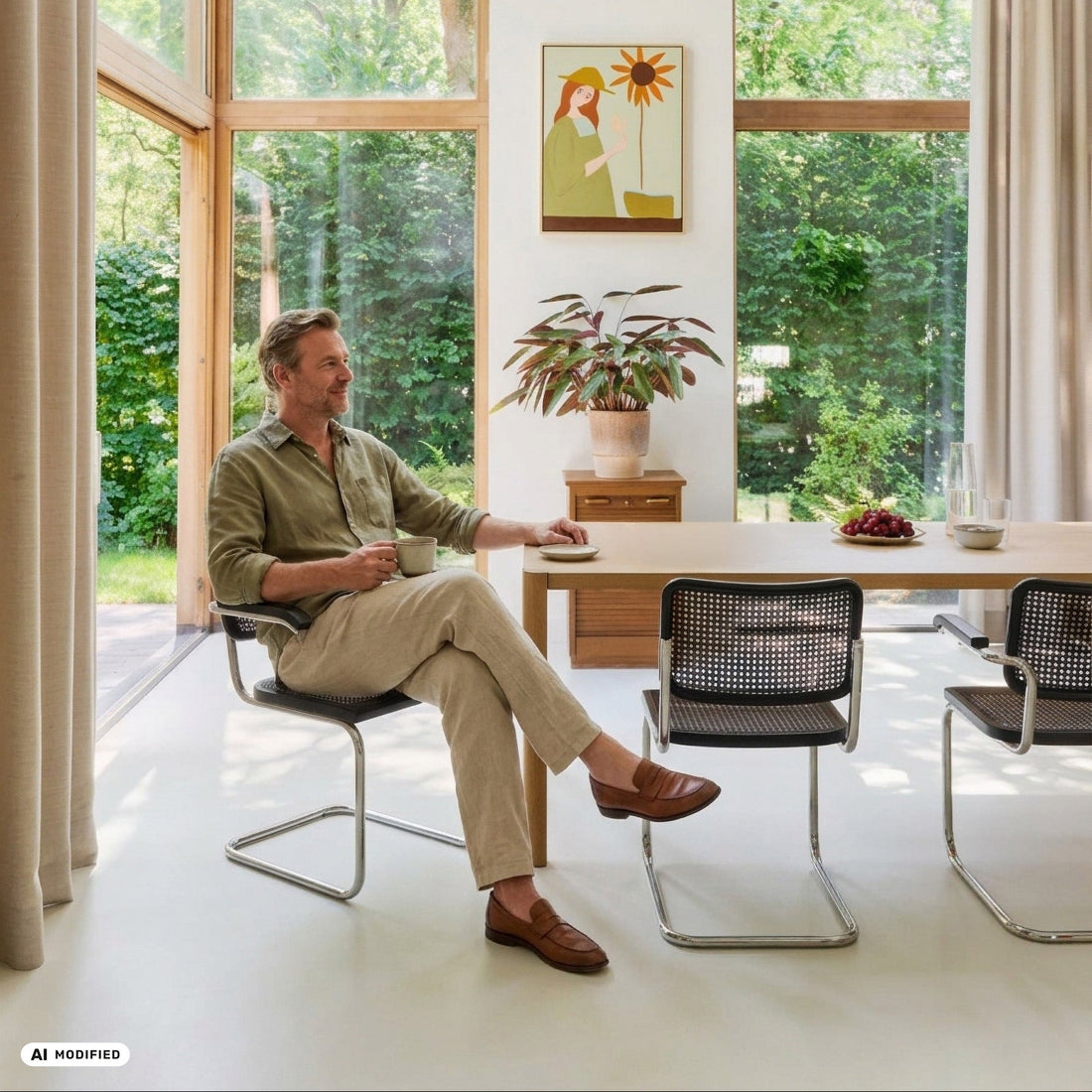
Furnishing with layers – what to expect:
- Why layer?
- Tactile variety
- The layered look for your home
- Creating depth without overloading
- The dos & don'ts of the layering trend
Why layer?
Furnishing rooms in layers doesn't just bring warmth, depth and personality to a space. The layered look also brings individual pieces of furniture and accessories together harmoniously – which makes it a wonderful way to integrate new finds into your existing interior.

Just as with an outfit, it's colours, patterns, textures and sizes that we strategically layer and arrange.
Tactile variety
Textures are the surfaces of materials that you can feel and see – soft, rough, cool, smooth or structured. Texture has a major influence on the character and effect of furnishings and rooms. The big interior fairs of 2025 showed just how broad this season's spectrum is: smooth marble, soft velours, rough and cool metals, warm wood. Layering channels these contrasts in an orderly way – to create interest deliberately.

The layered look for your home
Ideally, the layered look at home revolves around one statement piece – a dominant piece of furniture in the room. That could be a bed, a sofa or a desk. All the other designs take their cue from it. A bed with a duvet and pillow looks very functional. But if you place a smaller cushion in a contrasting colour in front of the 80 x 80 cm pillow and fold a woollen bedspread over the duvet so that the cool linen bedding still peeks out, you create a cohesive overall look.

You can layer accessories too: cordless rechargeable LED lights are very much on trend as table decorations. If you simply put the light on the coffee table, it looks out of place. But if you place a coffee-table book under the light and then put two lower decorative pieces next to it – sculptural objects or small catch-all bowls – your new favourite light gets a harmonious setting. Used this way, artistic vases look good in winter even without flowers.
Creating depth without overloading
Basically, your layering can be as wild as you are. Anything from eclectic to uniform is allowed, as long as you like it – and the balance is right.

When choosing furnishings, keep textures and colour in balance. The rule is: if you go for lots of different textures, use colour sparingly. If you prefer contrasting, bold colours, be careful about varying textures.
The new trend patterns – especially grids, stripes and animal prints – can move in too. But use them in moderation and combine them with understated textures and monochrome layers. That way you avoid overload.

It's also important not to forget the walls and other existing architectural or fixed elements. Like your furnishings, they're part of the layered look and have a big influence on the result.
As a general rule: it's not about filling the room. Layer where it makes sense, and use it to complete the look – beautiful, but also liveable. Just like a layered fashion outfit.
The dos & don'ts of the layering trend
A masterfully put-together layered look is a matter of detail, balance and proportion. Here are the dos and don'ts:
Dos
- Combine different materials and textures, for example smooth metals with warm wood

- Play with proportions – combining larger pieces of furniture with small furniture, and larger accessories with smaller pieces, creates harmony
- Combine sheer with opaque – playing with transparency shows off the different layers beautifully
- Repeat certain colours or materials in the room to create a coherent, cohesive look - complementary colours are exciting too

- Tone-on-tone layering looks particularly elegant – long-standing favourites are shades of cognac, beige or grey
Don'ts
- Don't overload rooms – not every room needs lots of layers; in small rooms and functional areas such as bathrooms and kitchens, less can be more
- Don't combine too many extravagant pieces – if you're new to layering, choose one statement piece and add simple basics

- Don't go for colours and textures at the same time – choose one!
- Don't overload the layered look with too many accessories – the focus should be on a few pieces with character
- Don't use dominant patterns in every layer – combine them with simple layers
Now it's your turn – be brave, combine, play and use layering to give your home a signature all of its own. Because home is at its best where style and personality meet.